Why Do the Poor Make So Many Poor Decisions?
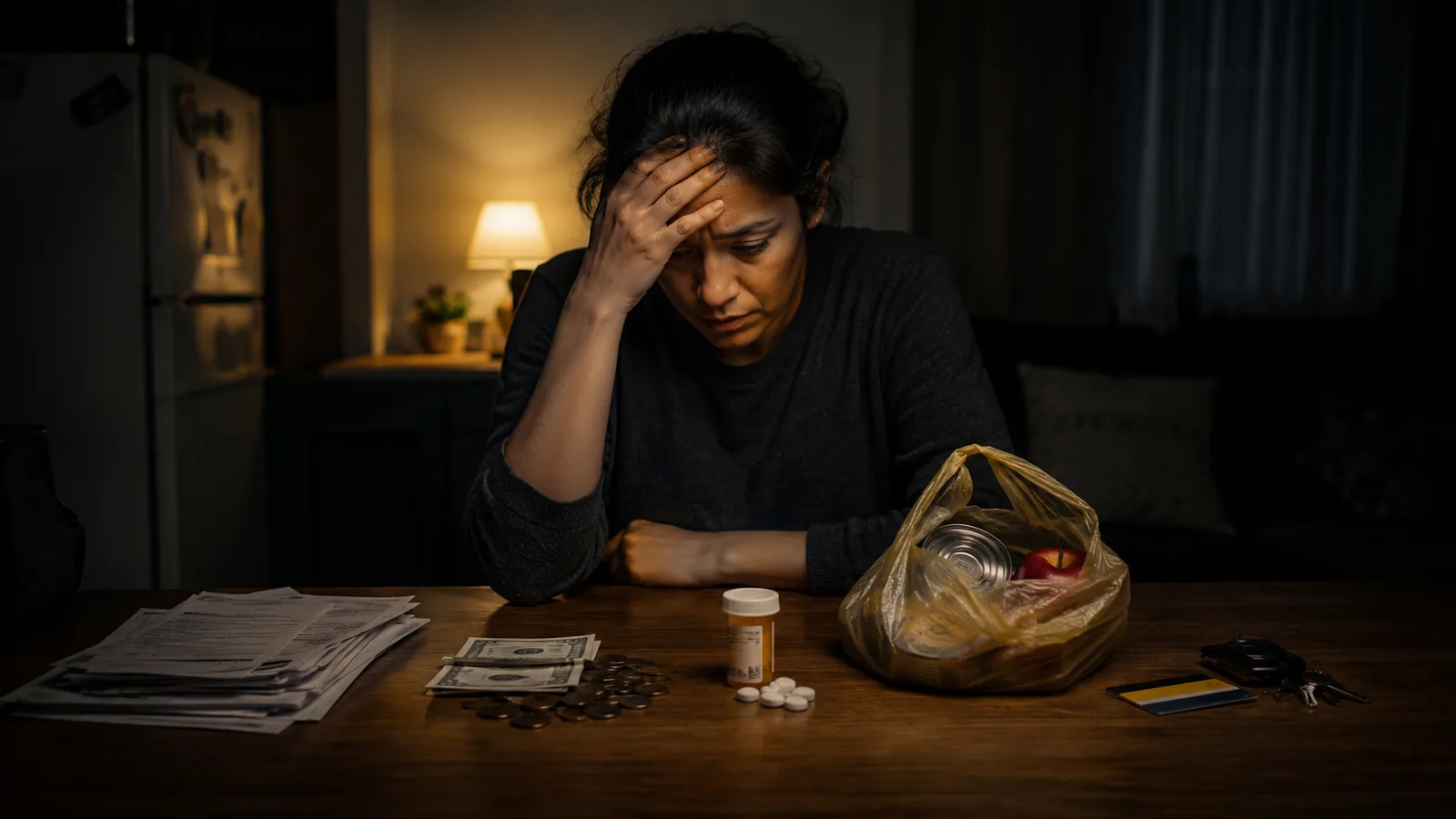
Poverty does not simply reduce the amount of money a person has. It changes the kind of decisions they are forced to make.
Imagine two people facing the same problem: their car needs a $500 repair. For one person, $500 is an annoying expense. They pay the mechanic, complain about it for a day, and move on. For the other person, $500 simply does not exist. Now the problem is no longer just about repairing a car. Do they delay the repair and risk a bigger breakdown? Borrow money at a high interest rate? Miss work? Use the money meant for rent or groceries? Ask a relative for help? From the outside, several of those choices may look irresponsible. From the inside, there may not be a responsible choice available at all.
That distinction matters because the question “Why do the poor make so many poor decisions?” usually contains an assumption: poverty is partly the result of bad decision-making. Sometimes it is. People of every income level can be impulsive, careless, shortsighted, or self-destructive. But the relationship also works in the opposite direction. Bad decisions can lead to poverty, while poverty itself can create the conditions in which bad decisions become more likely.
One of the strangest realities of being poor is that having less money can make ordinary life more expensive. A financially comfortable household can buy food and household goods in bulk and reduce the cost per unit. Someone with very little cash may be forced to buy the smallest package every few days, even though it costs more over time. A person with savings can replace a broken appliance immediately. Someone without savings may have to borrow money, pay interest, lose food stored in the appliance, miss work while dealing with the problem, or settle for a temporary solution that fails again.
Money therefore does more than allow people to purchase things. It allows them to prevent small problems from becoming expensive ones. A $300 emergency is still a $300 emergency when you have savings. Without savings, the same emergency can become $500 or $700 after late fees, interest, missed work, transport costs, and other consequences are added. Poverty often comes with penalties, and those penalties have a nasty habit of accumulating.
The same thing happens with time. Financial advice frequently tells people to think long term: save for retirement, build an emergency fund, invest regularly, acquire new skills, avoid expensive debt. All of that is sensible advice when the present is reasonably stable. But someone living from paycheck to paycheck may not be deciding between saving and spending in the usual sense. They may be deciding whether the electricity stays on or the rent gets paid, whether to buy medicine or groceries, whether to repair the vehicle needed for work or make a loan payment on time.
A decision that looks foolish over five years can be completely understandable over five days. Taking a high-interest loan is a terrible financial strategy in the long run. Yet if that loan keeps a family from being evicted or repairs the car that allows someone to keep their job, the borrower may understand perfectly well that the loan is expensive. The problem is not necessarily ignorance. The problem may simply be that every alternative is worse.
Scarcity also affects attention. When money is constantly short, financial problems do not arrive one at a time and politely wait for their turn. Rent, food, transport, debt, school costs, medical expenses, utility bills, and unexpected repairs compete for the same limited amount of money. The result is a continuous stream of small calculations: How many days until payday? Can this bill be delayed? Is there enough fuel for work tomorrow? What happens if someone gets sick this week?
When urgent problems consume attention, people naturally focus on what is immediately in front of them. That can make long-term planning harder. Someone thinking about how to make $40 last until Friday has less mental space for comparing retirement accounts, studying after work, researching a better mortgage, applying for dozens of jobs, or learning a new skill that may pay off two years later. This does not mean poor people are less intelligent. It means that human attention is limited, and poverty is extremely good at occupying it.
The consequences of mistakes are also radically different depending on how much financial margin someone has. Wealthy and middle-class people make foolish decisions constantly. They buy things they do not need, choose bad investments, trust the wrong people, waste money, start businesses that fail, forget bills, gamble, overspend, and make impulsive purchases. Human beings apparently become no less human after opening a brokerage account.
The difference is that people with money can often absorb their mistakes. If someone with substantial savings wastes $500, they may feel embarrassed or irritated. If someone with almost nothing loses $500, rent may not be paid. The exact same mistake produces two completely different outcomes. For one person it becomes a lesson. For another it can become debt, eviction, job loss, or a crisis that takes months to repair.
This is one reason poor decision-making may appear more visible among the poor. Wealth can hide mistakes. Savings can absorb them. Family money can repair them. Good credit can refinance them. Connections can create another opportunity. A person with enough resources can make a series of terrible decisions and still look financially stable from the outside. Someone without those resources may make one mistake and spend years paying for it.
Scarcity can also make risky opportunities more attractive. Imagine having $100 when you desperately need $1,000. Saving the difference slowly may take months, while the problem demanding the money exists right now. Under those conditions, a risky opportunity promising to turn $100 into $1,000 can become psychologically powerful. Someone with $50,000 in savings may immediately recognize the offer as a terrible gamble. Someone facing eviction may see a possible escape.
That helps explain why financially vulnerable people are so often targeted by lotteries, predatory lenders, gambling businesses, questionable investment schemes, fake business opportunities, and get-rich-quick programs. These businesses are not merely selling the possibility of profit. They are selling a shortcut out of a situation in which ordinary progress feels painfully slow. Desperation changes how risk looks. When the safe path already seems hopeless, the dangerous path can begin to look reasonable.
Long-term thinking itself becomes easier when life is stable. A person can invest money for ten years because they believe their immediate needs are covered. They can spend six months learning a new skill because they can survive while learning it. They can reject a terrible employer because they have savings. They can move to another city because they can afford a deposit and moving costs. They can wait for a better opportunity because waiting does not threaten their ability to eat.
Financial security therefore expands the number of choices available to a person. Poverty compresses them. Two people may theoretically have the same options, but only one may be able to afford the consequences of choosing them. Telling someone to “find a better job” sounds simple until moving requires money, retraining requires time, interviews require transport, and leaving the current job means losing the income keeping the household alive.
None of this means poor people have no agency. That idea is just as misleading as claiming that poverty is always the result of irresponsibility. People with very limited resources make disciplined, intelligent, and creative decisions every day. In fact, surviving on an unstable income often requires constant budgeting, negotiation, improvisation, and sacrifice. At the same time, some people absolutely do make preventable financial mistakes. They overspend, gamble, ignore advice, refuse opportunities, or maintain destructive habits.
Personal responsibility matters. But personal responsibility and external constraints can exist at the same time. A person can be responsible for a decision while also facing circumstances that make the better decision unusually difficult. Human behavior has never occurred in a vacuum. Advertising influences consumers. Social pressure influences teenagers. Workplace culture influences employees. Family background influences expectations. And scarcity influences financial behavior.
The deeper problem begins when disadvantages reinforce one another. Low income makes saving difficult. Without savings, emergencies require borrowing. Debt consumes future income. Lower disposable income makes reliable transportation, education, better housing, healthier food, and career opportunities harder to obtain. Those limitations can reduce earning potential, which keeps income low. The cycle then begins again.
This is why poverty is often described as a trap rather than simply a shortage of cash. Every problem can make the next problem more difficult to solve. A broken car may cause someone to miss work. Missing work reduces the paycheck. The smaller paycheck causes a bill to be delayed. The delayed bill creates a penalty. The penalty leaves less money for the car repair. What began as one mechanical problem turns into several financial ones.
Even two people earning exactly the same salary can therefore live in completely different economic realities. One may have no debt, supportive parents, reliable transport, stable housing, and six months of savings. The other may have medical debt, family members depending on them, an unreliable vehicle, high rent, and no emergency fund. Their income is identical on paper, but one person can use income to build wealth while the other must use it to constantly prevent existing problems from getting worse.
So when we see someone making what appears to be an obviously bad financial decision, the useful question is not always “Why would anyone do that?” It may be worth asking what alternatives were actually available to them. Sometimes the answer will still be irresponsibility. Sometimes it will be ignorance. Sometimes it will be impulse. But sometimes the “bad decision” is simply the least damaging option among several bad choices.
Perhaps the more revealing question is not why poor people make poor decisions, but how many of our own good decisions are possible because we can afford to make them. It is easy to recommend patience when the rent has already been paid. It is easy to condemn expensive borrowing when a bank is willing to lend you money cheaply. It is easy to tell people to think about the future when the present is not threatening them every week.
Wealth does not automatically make people wiser, and poverty does not automatically make people foolish. What money provides is margin: margin for mistakes, margin for patience, margin for planning, margin for saying no, margin for waiting, and margin for recovering when something goes wrong.
When that margin disappears, every decision becomes heavier. Every mistake becomes more expensive. Every emergency becomes more dangerous. And choices that look irrational from a distance can begin to make uncomfortable sense once we understand the circumstances in which they were made.
Comments (0)
No comments yet
Be the first to share your thoughts
Log in to leave a comment.